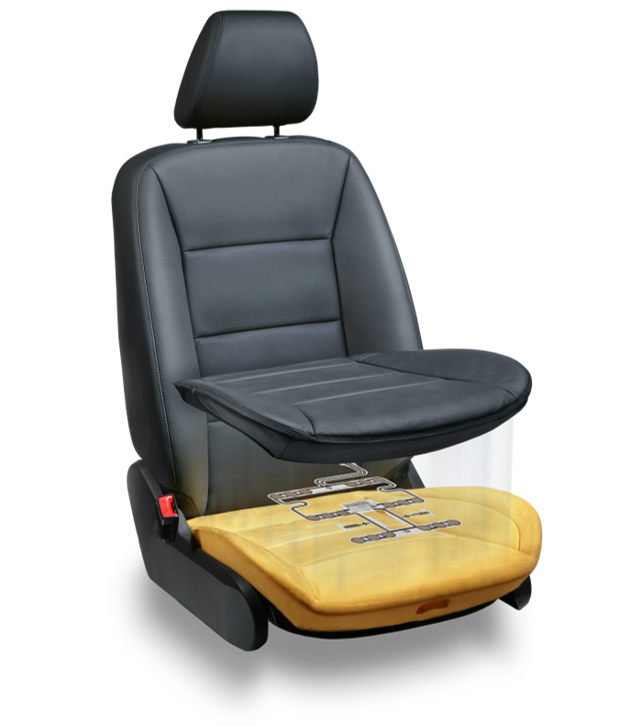

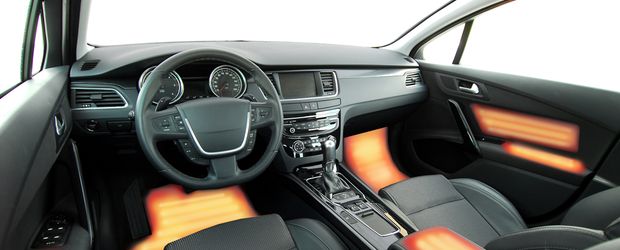
A key trend in the automotive industry is the tendency for motor vehicles to become “smarter” and to have more and more information interfaces with the driver or passenger, all while being lightweight and taking up very little installation space. As more operating functions, including eventually driving itself, are carried out by on-board computers, the driver/passenger will have even more interaction with information and entertainment systems in the car. The trend is for these interfaces to be integrated into the car interior, which has led to flexible and conformable touch sensors and displays, enabled by OPE to be used in modern cars. Among current applications, seat occupation detectors that enable the detection and classification of vehicle occupants for important safety functions are the most inconspicuous parts facilitated by printed electronics. OLED technology is already implemented commercially in cars, both for interior displays and for taillights. A key selling point for OLED in this case is the freedom of design, which is not feasible with any other light source. Furthermore, the transition to electric vehicles requires new heating concepts for the automotive interior where printed heating foils are that can be integrated directly beneath the surface represent an ideal solution.
Application Examples
Flexible and printed electronics has successfully entered important industry sectors. From consumer electronics, internet of things and healthcare to automotive, smart packaging and buildings: Printed electronics is now globally being applied in numerous products and industries. The focus industries OE-A is looking into, which are also represented in the OE-A Roadmap, can be found below.
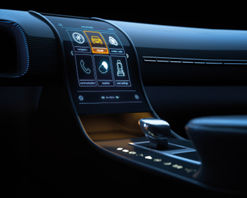
Smart Surface HMI
Curved, backlit touch control sensor
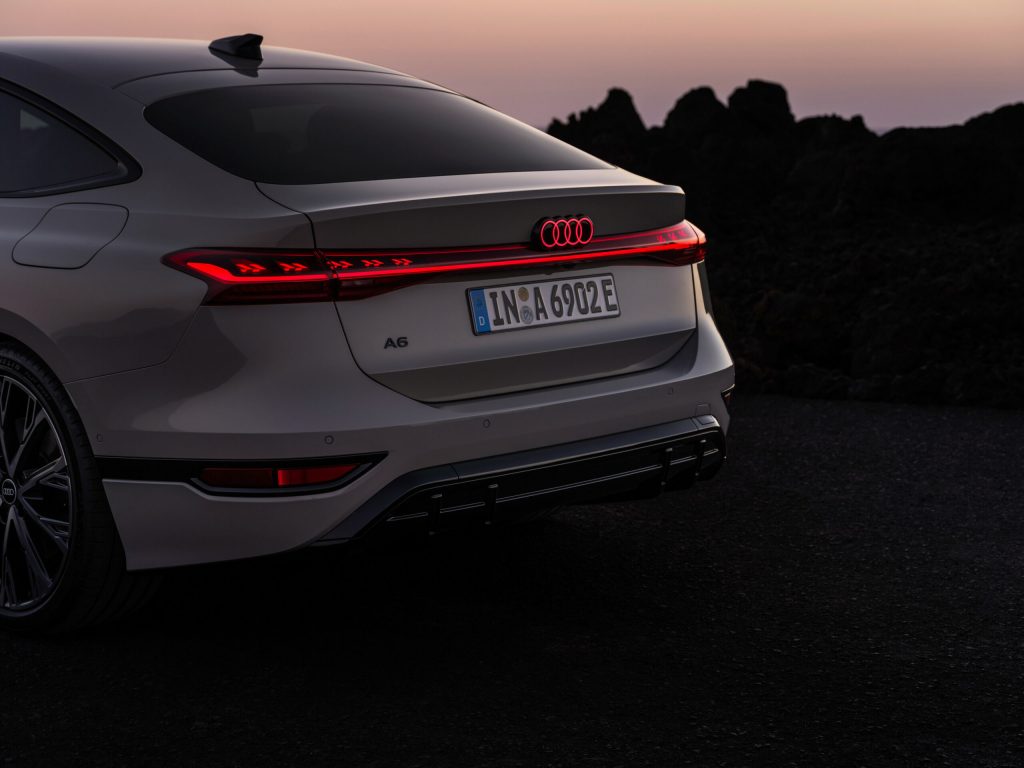
OLED Rear Lights
High-density digital OLED rear lights for dynamic signaling